

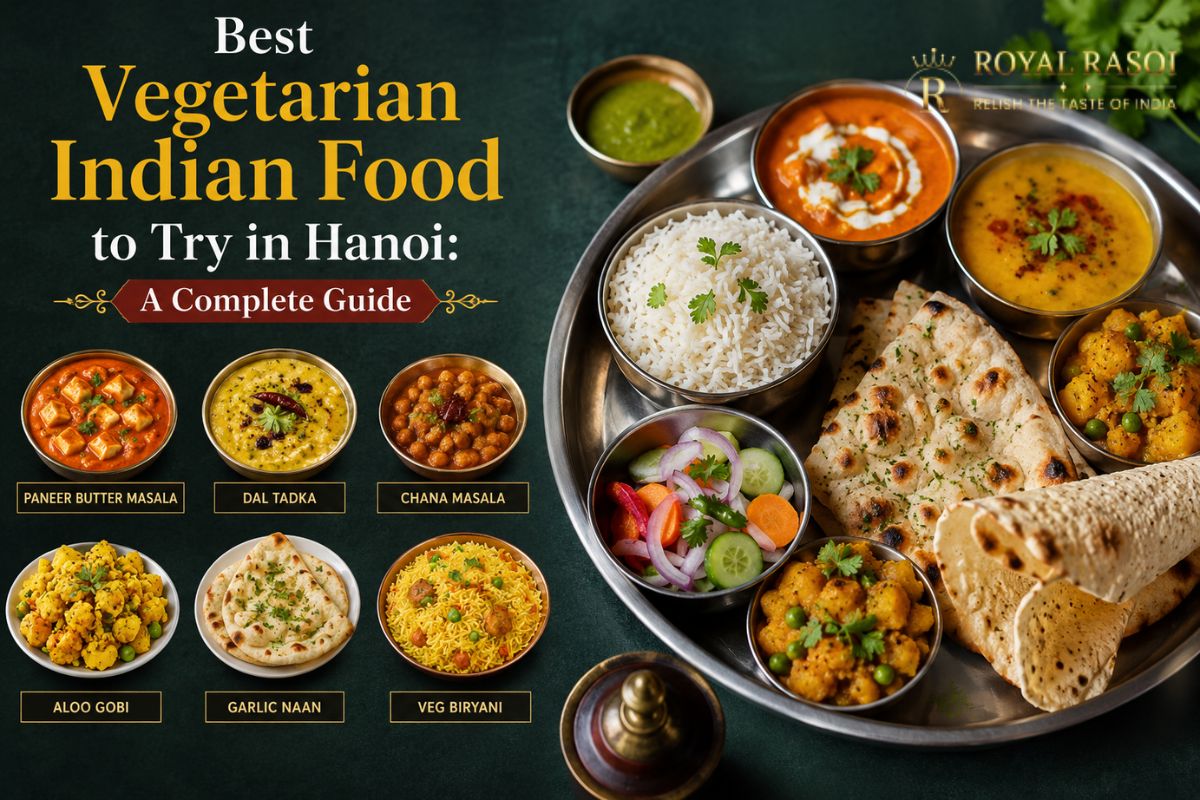
Best Vegetarian Indian Food to Try in Hanoi: A Complete Guide
Key takeaways
- The vegetarian Indian dishes in Hanoi comprise much more than ordinary paneer choices.
- Cau Giay distinguishes itself for authentic Indian vegetarian cooking.
- The specialties of dal makhani and palak paneer lie in standard Indian cooking techniques.
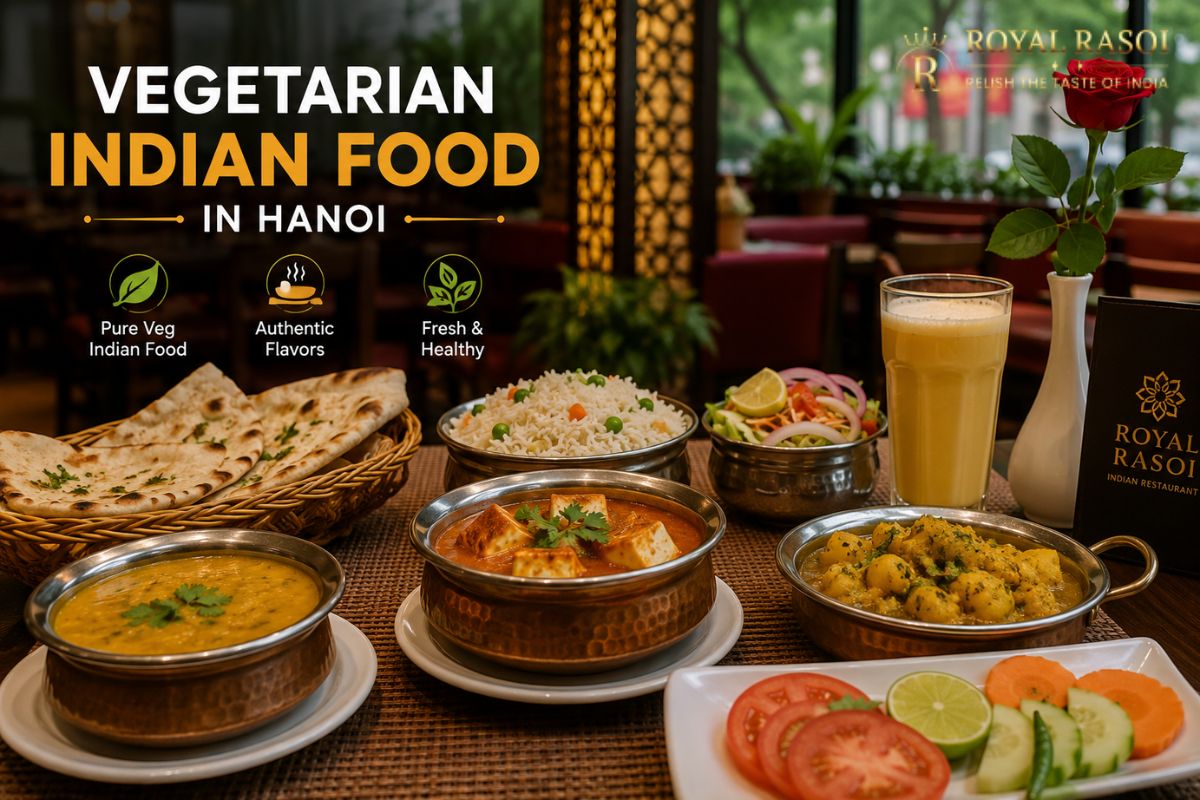
- Royal Rasoi provides purely vegetarian Indian delicacies that are made traditionally.
Ten years back you had maybe two or three real options for vegetarian Indian food in Hanoi, and even those leaned more Vietnamese-fusion than anything you'd get in Delhi. That's changed as the Indian expat and student population has grown, plus a steady flow of Indian tourists. Both groups want food that tastes like home, not a version toned down for someone who's never had dal.
A restaurant cooking for a homesick Indian family just behaves differently than one cooking for a tourist trying Indian food for the first time. The spice is real. Nobody's rationing the ghee.
What makes a vegetarian Indian meal actually good?
A lot of people assume vegetarian Indian food is the meat dishes with the meat left out. It's not supposed to work that way. Good vegetarian cooking gets its depth from lentils, dairy, and vegetables directly, no shortcuts needed.
However, the stuff that actually separates a good kitchen from a mediocre one: whether the spices are ground fresh instead of sitting pre-mixed for months, whether the tempering at the end gets a proper sizzle of ghee and cumin instead of a token splash, and whether the dal gets the hours it needs instead of getting rushed off the stove thin and grainy. Paneer matters too. The rubbery, been-in-the-fridge-too-long kind can wreck an otherwise solid curry.
Get those right, and everything else on the menu tends to follow.
Explained: Best vegetarian Indian restaurant
| Restaurant | Area | Known For | Price Range |
|---|---|---|---|
| Royal Rasoi | Cau Giay | Full vegetarian menu, thalis, dal makhani | Mid-range |
| Indian restaurant chains, Old Quarter | Hoan Kiem | Tourist-friendly, quick service | Mid to high |
| Small South Indian eateries | Various | Dosa, idli, uttapam | Budget |
| Hotel Indian kitchens | Ba Dinh | Buffet-style, safe but generic | High |
Old Quarter places are handy if you're staying near Hoan Kiem Lake, but they cook for a broad tourist crowd, so flavors get softened. South Indian spots are good for breakfast dishes but limited if you want a full North Indian thali. Hotel kitchens are fine. Consistent, forgettable, fine.
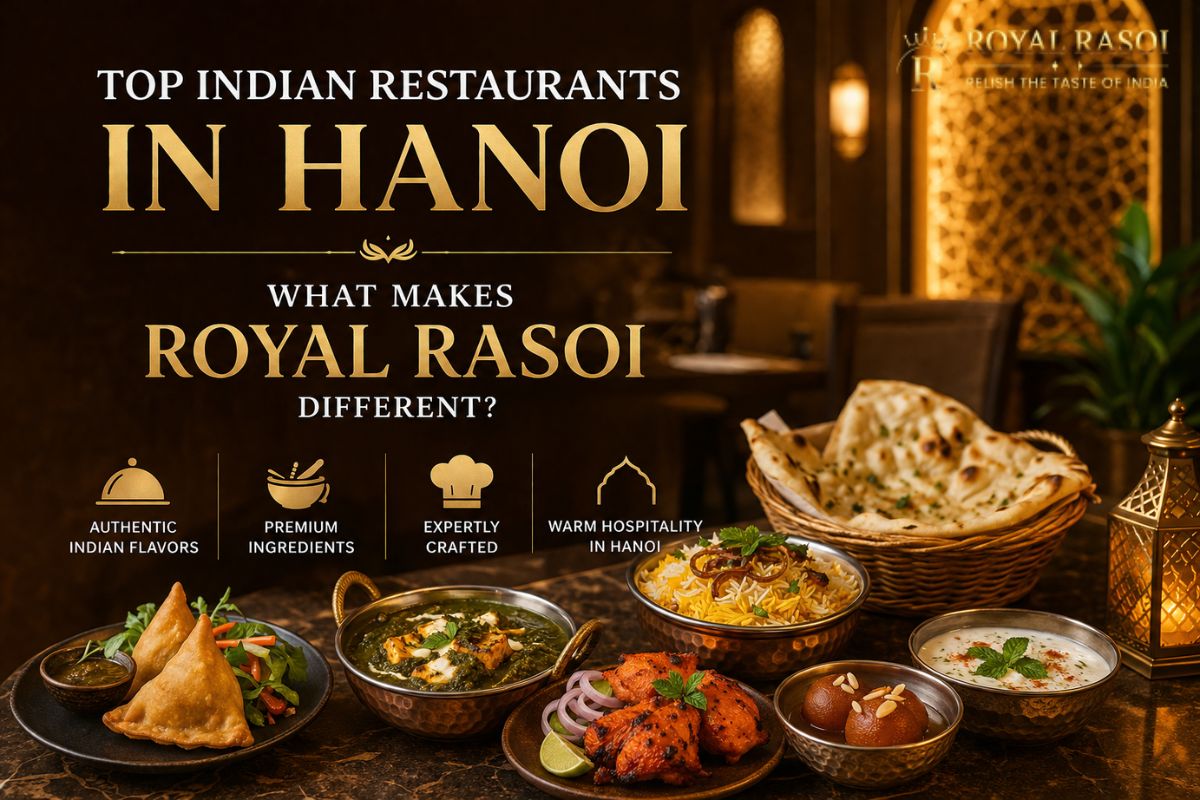
Royal Rasoi in Cau Giay is one of the best Indian vegetarian restaurants in Hanoi for one simple reason: the menu was built around vegetarian food from the start, not adapted from a meat-first one.
Why does Cau Giay stand out?
Cau Giay has become something close to an unofficial Little India in Hanoi. There's a real Indian and Nepali community based there, plus a good number of IT and business offices staffed by Indian professionals. That changes how the restaurants cook. They're not guessing at what tourists might like; they're cooking for people who'd notice immediately if something was off.
Therefore, this is where you'll find the best vegetarian Indian restaurant in Cau Giay, and honestly it's not close. The area has more Indian eateries packed together than anywhere else in the city, and the competition between them has pushed quality up rather than let it slide. If you're anywhere near Cau Giay and haven't tried the Indian food there, you're skipping one of Hanoi's better food streets.
Where to find the best Dal Makhani in Hanoi?
Dal makhani sounds simple on paper. Black lentils, kidney beans, butter, cream, tomato. In practice, it's one of the harder dishes to pull off well, because it needs hours on low heat to build the smoky depth that separates it from an ordinary lentil curry.
Furthermore, a lot of kitchens in Hanoi skip that part. They'll cook it for thirty or forty minutes instead of several hours, then paper over the shortcut with extra cream. You can taste it in the first bite. Rushed dal makhani sits heavy and tastes as one note played too long. The slow-cooked version is layered, a little sweet from the caramelized onions, with a smokiness you genuinely cannot fake with dairy.
If you're chasing the best dal makhani in Hanoi, just ask how long they cook it. Feels like a strange question to ask a waiter, but the kitchens that do it right will tell you without hesitating.
Where to find the best Palak Paneer in Hanoi?
Palak paneer has the opposite problem. Overcooked spinach that's gone bitter and almost black, paired with paneer that's clearly been sitting around too long. Done properly, the spinach stays bright green, and the paneer is soft enough that you barely need a knife.
Most kitchens that get this right blanch the spinach quickly instead of letting it simmer in the sauce forever, which is what kills the color and that slightly grassy freshness. The paneer, ideally, was made that day or the day before, not frozen months ago and thawed out.
Ask around for the best palak paneer in Hanoi and the honest answer is: wherever the paneer is actually fresh, and the spinach still tastes like spinach, not like boiled greens with cream dumped on top.
Comparing your options
| Priority | Best Choice |
|---|---|
| Authentic North Indian thali | Royal Rasoi, Cau Giay |
| South Indian breakfast dishes | Small South Indian eateries |
| Convenience near Old Quarter | Chain Indian restaurants |
| Buffet with variety | Hotel Indian kitchens |
| Best dal makhani specifically | Royal Rasoi, Cau Giay |
Common mistakes when ordering vegetarian Indian food
People assume vegetarian automatically means vegan, which it usually doesn't. A lot of these dishes lean heavily on dairy, so if that matters to you, just ask. Diners also tend to order the mildest thing on the menu out of habit, not realizing most Hanoi kitchens already tone the spice down by default. If you want it closer to how it's actually cooked back home, say so.
Skipping the bread is another one. A good garlic naan tells you more about a kitchen than people give it credit for. And almost nobody asks about the paneer, whether it's fresh or frozen, even though that single detail changes a dish more than most of the spices do.
Tips from someone who eats this weekly
Go on a weekday evening if you can manage it. Weekend crowds mean kitchens are moving faster, and the dishes that need time, dal makhani especially, are the first ones to suffer for it. If a place has a thali, order it on your first visit. Fastest way to judge a kitchen's actual range instead of betting everything on one dish.
Ask the staff what they'd order for themselves. It's seldom what's printed in bold at the top of the menu.
Final thoughts
Vegetarian Indian food in Hanoi isn't where it was ten years ago, and that's genuinely good news if you're tired of one sad paneer dish tucked onto an otherwise meat-heavy menu. Cau Giay in particular has earned its reputation the hard way, through actual competition between actual good kitchens, and places like Royal Rasoi show what a menu looks like when vegetarian food isn't a compromise. If you're in the area, build the meal around a proper thali instead of ordering one dish and crossing your fingers.
Frequently asked questions
-
1. What's the best Indian vegetarian restaurant in Hanoi?
Royal Rasoi in Cau Giay stands out for its full vegetarian menu, and the dal makhani in particular is cooked the slow way instead of rushed.
-
2. Is Cau Giay actually good for Indian food, or is that overstated?
It's not overstated. There's a real Indian community there, and the restaurants cook accordingly.
-
3. What makes dal makhani different from a regular dal?
Mostly the black lentils and kidney beans, plus hours of simmering with butter and cream, which gives it a richer, smokier result than a quicker everyday dal.
-
4. Is palak paneer vegan?
No. It's vegetarian, but the paneer and the cream or butter in the sauce mean it's not vegan unless a kitchen specifically adjusts it.
-
5. Are Indian restaurants in Hanoi generally decent for vegetarians?
Most have vegetarian options on the menu. Restaurants built specifically around vegetarian food, like the ones clustered in Cau Giay, tend to do it noticeably better.
-
6. Do Hanoi kitchens water down the spice level?
A lot of them do, by default. Ask for it "Indian spicy" if that's not what you want.
-
7. What's worth ordering on a first visit?
A thali, if it's on the menu. You get a taste of several dishes at once instead of gambling on a single one.
-
8. Does fresh paneer actually make a noticeable difference?
Yes. Fresh paneer is soft and slightly crumbly. Older or frozen paneer turns rubbery the moment it hits the pan.
-
9. Can vegan diners eat at these places?
Some dishes can be adjusted, dals without cream especially, but it's worth confirming directly with the restaurant rather than assuming.
-
10. What's the best time of day or week to go?
Weekday evenings. Kitchens aren't rushed, and that matters most for anything slow-cooked, like dal makhani.