-


-
 Royal Indian Elegance DiningAuthentic Indian Restaurant in Hanoi at Grand Plaza Hotel
 -
 A Royal Taste of India,Now in the Heart of Hanoi.
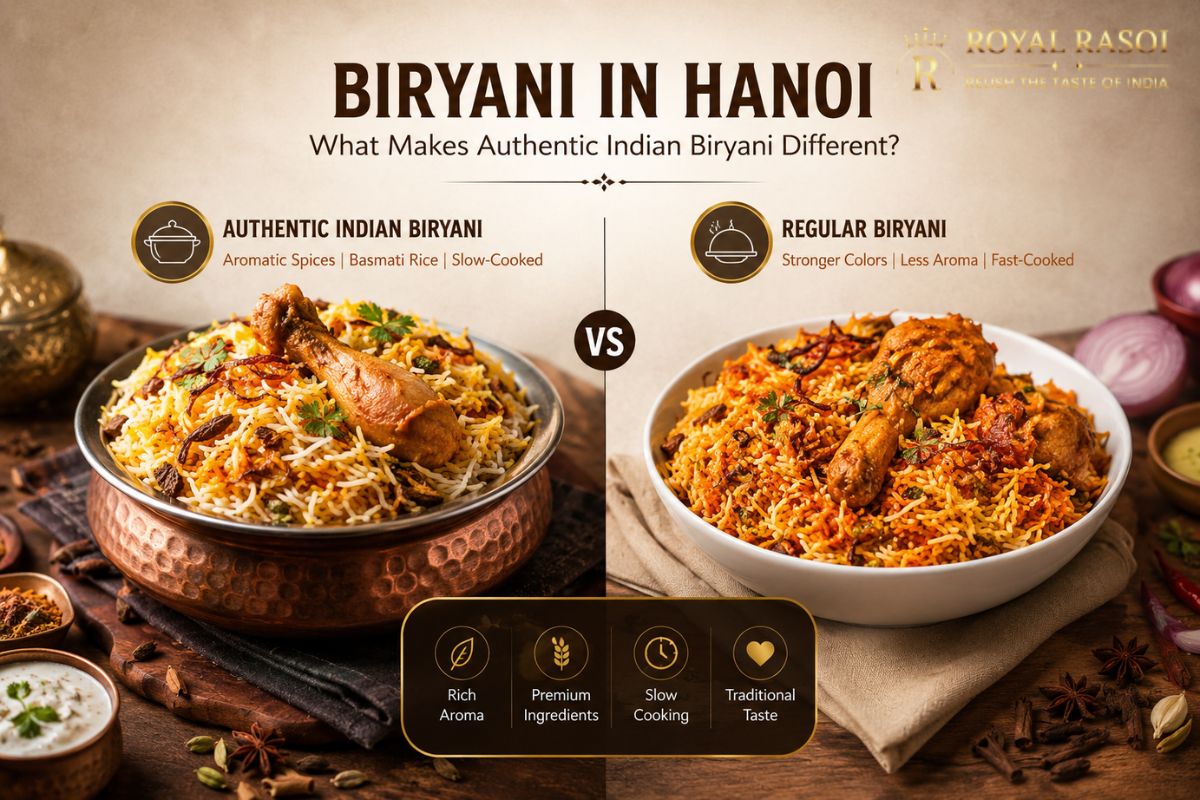
Biryani in Hanoi: What Makes Authentic Indian Biryani Different?
Key Takeaways
- Real biryani uses basmati rice and special layering and doling methods.
- Restaurants in Hanoi may change the spices to suit the local palate, while maintaining their authenticity.
- Biryani made properly has light and separate grains of rice as opposed to mushy rice.
- Knowing the important measurements will lead you to choose the best Indian restaurants in Hanoi.
Ask ten people what makes biryani "authentic," and you'll get ten different answers, most of them wrong in some small way. In Hanoi, where Indian food has picked up a real following over the last few years, biryani shows up on almost every Indian restaurant menu in the city. Some of it tastes like what you'd get in Hyderabad or Lucknow. A lot of it doesn't, and that gap isn't automatically a bad thing. Recipes change when they travel. The question is which changes are reasonable adaptations and which ones are just shortcuts.
If you're trying to find the best Indian restaurants in Hanoi for a biryani that actually reflects where the dish comes from, it helps to know the difference before you order.
What actually makes biryani "authentic"
Biryani isn't one recipe. It's a whole family of dishes shaped by region, community, and a few centuries of trade and migration through the subcontinent. Hyderabadi biryani layers raw, marinated meat with partially cooked rice and seals the pot, a method called kacchi. Lucknowi biryani cooks meat and rice separately first, then combines them, which is why it tends to come out milder and more fragrant.
What actually connects these regional styles has nothing to do with a fixed spice list. It comes down to technique:
- Aged, long-grain basmati that holds its shape and stays separate after cooking
- Dum: sealing the pot and letting it finish on low heat so steam does the last stage of cooking
- Whole spices doing the work of aroma, not just heat
- A real balance between the meat and the rice, so neither one drowns the other
However, if a biryani is just spiced rice with some meat stirred through, cooked fast in one pan, the technique that actually defines the dish is missing. Most people don't notice that gap until they've had a proper one and can taste the difference.
How does biryani in Hanoi tend to differ?
Vietnamese diners generally lean toward milder, less oil-heavy food than what's standard in North Indian cooking, and restaurants here adjust for it. If you're eating at an Indian dinner restaurant Hanoi that serves a mix of expats, tourists, and local diners, you'll usually notice less chili, less ghee, and often chicken standing in for the slower-cooking mutton or lamb that's more common back in India.
I don't think that's a problem on its own. A kitchen toning down the heat for its actual customers is just running a business well. Where it becomes an issue is the rice itself: clumped, too wet, missing the layered aroma that only comes from doing dumb properly. That's not an adaptation. That's a shortcut.
If a biryani you've had in Hanoi tasted flat, it's worth asking whether the kitchen actually does dumb cooking, or whether they're mixing pre-cooked rice into a curry and calling it biryani.
The building blocks: rice, spice, and dum cooking
Three things decide whether a biryani actually holds up.
- Rice: Basmati needs to be aged, ideally over a year, to stay firm and separate once cooked. Cheaper or shorter-grain rice breaks down and turns sticky. It's the quickest way to spot a rushed batch.
- Spice layering: A proper biryani builds flavor in stages. Marinate the meat first, then layer whole spices, bay leaf, cardamom, star anise between the rice and meat instead of dumping everything into one pot at once.
- Dum cooking: This is the step kitchens skip most often, usually because it takes time they don't want to spend. Dum means sealing the pot, traditionally with dough, and cooking on very low heat so the rice finishes in steam that's already carrying the meat's juices and spices. Skip that and just stir everything in a wok, and you get a faster dish, but a flatter one.
Get these three right, and you've basically found a kitchen worth going back to.
Common mistakes people make when judging biryani abroad
A few habits lead people to misjudge biryani they eat outside India.
Assuming spicier automatically means more authentic is a big one. Kolkata's version is actually mild and a little sweet, built around a signature potato that most people outside Bengal have never even heard of. Comparing every biryani to a Hyderabadi one and calling anything different "fake" misses that these are separate traditions, not a ranking system.
Color throws people off too. A deep orange or red biryani isn't automatically more flavorful. Sometimes that's just food coloring doing its job, not extra spice.
Moreover, the one mistake worth remembering above the rest: ignoring rice texture. It's the most reliable signal there is. Clumped grains mean something in the process got rushed, no matter how the rest of the plate looks.
What to expect at a genuine North Indian restaurant in Hanoi?
A solid North Indian restaurant in Hanoi that takes biryani seriously usually gives itself away before the food even arrives. The menu splits biryani into actual categories: chicken, mutton, vegetable, instead of listing one catch-all version. Staff can tell you whether it's cooked dum-style or made to order without stumbling over the question. And the rice, when it lands on your table, is visibly separate rather than folded into something that looks like a curry with rice mixed in.
Additionally, presentation matters here too. Traditional biryani comes with raita on the side and sometimes a light gravy called salan, served separately rather than poured over the rice. If a place brings you raita and a lime wedge without you asking, that's usually a sign the kitchen is following the whole serving tradition, not just the recipe card.
Authentic vs. adapted biryani: A quick comparison
| Element | Authentic Biryani | Commonly Adapted Version |
|---|---|---|
| Rice texture | Separate, fluffy grains | Often clumped or mushy |
| Cooking method | Dum (sealed pot, slow steam) | Quick stir-fry style mixing |
| Spice level | Balanced, aromatic | Reduced for local taste |
| Rice age | Aged basmati (12+ months) | Sometimes shorter-grain rice |
| Sides served | Raita, salan on the side | Often served plain |
| Meat prep | Marinated, layered raw or par-cooked | Sometimes pre-cooked separately, added last |
This isn't a strict scorecard for every restaurant in the city, but it's a decent pattern to check against when you're trying somewhere new.
Finding the best Indian restaurants in Hanoi
Hanoi's Indian food scene has grown well past the handful of expat-focused spots it started with. When you're looking for the best Indian restaurants in Hanoi, star ratings alone won't tell you much. Check how many biryani varieties are actually on the menu. A place offering only one generic "chicken biryani" probably isn't specializing in it. Ask whether the rice is made fresh per order or kept warm in a big batch. The batch version usually loses its texture within the hour.
Reviews from Indian diners specifically, the ones that say "tastes like home" rather than just leaving five stars, tend to be more useful than an aggregate score, since what counts as good biryani varies a lot depending on who's rating it.
Tips for tourists ordering biryani for the first time
If you're visiting Hanoi and want the best Indian restaurant in Hanoi for tourists, a few things make ordering easier.
Ask for mild spice if you're not sure of your tolerance. Most kitchens will adjust on request without changing the core recipe. Order raita even if it doesn't come automatically, since it cuts through the richness of the rice. If you're new to Indian food altogether, a vegetable or paneer biryani is a gentler place to start than a meat one. Moreover, don't judge the whole cuisine off one dish. Pair it with a simple dal or some naan, and you'll get a much better sense of what Indian food actually offers.
A restaurant willing to walk a first-timer through these choices patiently is usually one that cares about the meal, not just the check.
Expert insights on judging quality
After eating biryani across a fair number of cities, I've stopped paying much attention to the spice blend as a quality signal. What actually matters is timing. Rice cooked too early and kept warm starts losing its texture within thirty or forty minutes, no matter how good the recipe was to begin with. Kitchens that batch-cook biryani ahead of a busy dinner rush are almost always trading freshness for speed. The good ones accept a longer wait, because dum genuinely can't be rushed, and that patience is the one thing you can actually taste on the plate.
Wrapping it up
Biryani in Hanoi doesn't have to taste exactly like it does in India to be worth ordering. What matters more is whether the kitchen respects the technique behind it: real rice, real dum cooking, real layering, instead of treating it as spiced rice with meat thrown in. Once you know what to look for, spotting the difference between a rushed plate and a careful one gets a lot easier.
If you're after a place that gets these details right, Royal Rasoi is worth a try for a biryani that stays closer to how it's meant to be made, without losing the feel of a proper Indian dinner out.
Frequently asked questions
-
1. What makes biryani different from regular spiced rice?
Biryani relies on layered cooking and dum steaming rather than just mixing spices into rice, which is why it ends up with distinct flavor layers instead of one flat taste.
-
2. Why does biryani in Hanoi sometimes taste milder than in India?
Many restaurants tone down spice for local preferences, since Vietnamese cuisine generally favors lighter, less oil-heavy flavors than North Indian cooking does.
-
3. Is Hyderabadi biryani the same as Lucknowi biryani?
No. Hyderabadi biryani cooks raw meat with the rice together, while Lucknowi biryani cooks them separately first, giving it a milder, more delicate result.
-
4. How can I tell if a biryani was cooked using the dum method?
The grains stay separate and fluffy, and the dish has a layered aroma instead of tasting flat or one-note from the first bite to the last.
-
5. What sides typically come with authentic biryani?
Raita, a cooling yogurt side, and sometimes a light gravy called salan, both served separately rather than poured over the rice itself.
-
6. Is vegetable biryani less authentic than meat biryani?
No. It follows the same layering and dum process, just with vegetables and paneer standing in for meat as the core ingredient.
-
7. Why does rice texture matter so much when judging biryani?
Clumped or mushy rice usually means the process got rushed or the rice was too short-grain, either of which ruins the separation and aroma biryani depends on.
-
8. What should tourists order if they're new to Indian food?
A mild vegetable or paneer biryani is an easier entry point, especially paired with naan or dal for a fuller sense of the cuisine.
-
9. Does spicier biryani mean better quality?
Not really. Kolkata's biryani is intentionally mild and slightly sweet, which is a good reminder that heat level says nothing about how well the dish was made.
-
10. How do I find a good Indian restaurant in Hanoi for biryani specifically?
Look for multiple biryani varieties on the menu, rice made fresh per order, and reviews from Indian diners that specifically mention authenticity, not just star counts.