



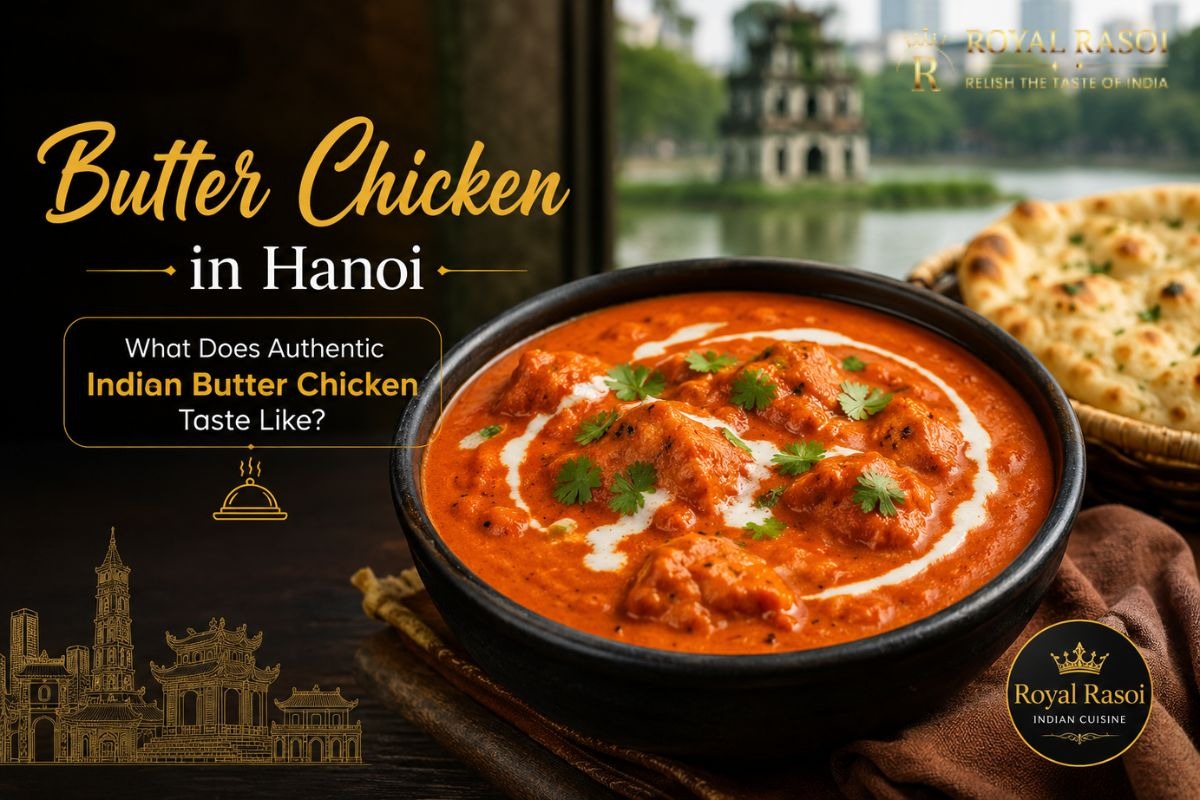
Key takeaways
- True butter chicken is a confluence of the tanginess of the tomatoes, creaminess of the cream, and warmth of the spices.
- Many Hanoi restaurants will make adjustments to the spice and sweetening levels of dishes so that they adhere to local tastes.
- A credible North Indian restaurant in Hanoi serves properly cooked chicken that’s been marinated in yogurt.
- Royal Rasoi serves genuine butter chicken with tandoor-marinated chicken and slow-cooked sauce made from tomatoes and cashews.
- The flavor of butter chicken is complex and therefore goes beyond the standard creamy tomato sauce. The original murgh makhani dish consists of sour tomatoes, butter, cream, garam masala, fenugreek, and some heat from hot chili. The spices should come in the first place and then a smooth cream texture. The listed characteristics can help a person find one of the best butter chicken spots in Hanoi.
What butter chicken actually is?
Butter chicken came out of a Delhi restaurant called Moti Mahal in the 1950s, reportedly invented to keep leftover tandoori chicken from drying out by simmering it in a tomato-butter gravy. That origin story explains the dish's structure: chicken is cooked in the tandoor first, then the gravy comes second. It isn't boiled raw in sauce. It's char-grilled, then folded into a gravy built separately from tomatoes, butter, cream, and spices.
However, this is where the confusion usually starts. Some kitchens skip the tandoor step and poach the chicken directly in the sauce. It can still taste fine, but it's missing the smoky depth a real tandoor gives it. If you've had butter chicken that tasted flat or one-note, that's usually why.
The flavor profile you should expect
Properly made butter chicken hits four notes, roughly in order: tang, warmth, richness, and a faint smokiness at the back of the palate. Tomatoes provide acidity. Garam masala and kasuri methi, dried fenugreek leaves, add a warm, slightly bitter backbone. Cream and butter smooth things out without burying the spice. And the tandoor-charred chicken leaves a whisper of smoke running underneath all of it.
Moreover, texture matters just as much. The gravy should be silky, not gluey, thin enough to soak into naan instead of pooling on top of it. If it feels more like a thick pink cream sauce than a spiced tomato gravy, something's been changed, usually more cream and less spice, which happens when a kitchen is playing it safe for unfamiliar diners.
Why does butter chicken in Hanoi often taste different?
Vietnamese diners generally lean toward milder, less oily food than what's standard in North Indian cooking, and a lot of restaurants adjust for that. It's a fair business call. Nobody wants to alienate half their customers. But it also means the "butter chicken" on the menu might be a toned-down cousin of the real thing.
A few changes show up again and again:
- Less chili, more sugar- Some kitchens add sugar to make up for the reduced heat, and that tilts the whole dish toward sweet instead of balanced.
- Heavier cream, lighter spice- This makes the sauce smoother, but flatter too, losing the layered spice underneath.
- Bottled simmer sauces- A few places use pre-made bases instead of building the gravy from scratch, which cuts out the depth that comes from slow-cooked onion, ginger, and garlic.
None of that makes the food bad, exactly. It just makes it a different dish wearing the same name. If you're specifically hunting for an authentic curry restaurant Hanoi visitors and expats actually recommend, it's worth asking a few pointed questions before you order.
How to recognize a genuine North Indian restaurant in Hanoi?
A few practical signs separate the real thing from a fusion adaptation. Start by checking whether the menu has tandoori items on it: tandoori roti, seekh kebab, tandoori chicken as its own dish. A kitchen that owns and actually uses a tandoor has put money into equipment most fusion spots skip entirely.
Next, look at the spice range. A restaurant offering only "mild" and "medium" is probably calibrated for comfort over accuracy. Places willing to offer real heat, including levels that will genuinely challenge you, tend to take the cuisine more seriously.
One thing that's easy to miss: ask whether the chicken is marinated overnight. Real butter chicken depends on a yogurt-spice marinade that needs time to work into the meat. Same-day chicken with no marination period just won't have that tenderized, smoky quality, no matter how good the gravy turns out. The best Indian restaurants in Hanoi give you fresh and creamy chicken items.
What the kitchen should be doing behind the scenes
- Marinating chicken in yogurt, ginger-garlic paste, and spices for at least four to six hours, ideally overnight
- Grilling or roasting the chicken in a tandoor or high-heat oven before it goes anywhere near the gravy
- Building the tomato base from fresh tomatoes, not concentrate or bottled paste alone
- Finishing with kasuri methi, which gives the dish its distinct dried-leaf smell
Common mistakes diners make when judging butter chicken
A lot of people assume creamier means more authentic, which is backward. Excess cream is usually a sign the kitchen is compensating for a weak spice base. Another mistake is judging the dish on color alone. A fluorescent orange gravy usually points to added food coloring rather than a real tomato-and-spice reduction, which naturally sits somewhere between deep red and burnt orange.
Therefore, diners also expect butter chicken to be spicy in the chili sense, when traditionally it's one of the milder North Indian curries by design. The warmth comes from spice complexity, not chili volume. If you want real heat, that's vindaloo territory, or a proper Chettinad curry.
What sets an authentic curry restaurant Hanoi diners trust apart?
Beyond butter chicken specifically, a trustworthy curry restaurant tends to be consistent across the whole menu, not just on one signature dish. If the dal is properly tempered, the naan is made fresh instead of reheated, and the rice is actually fragrant basmati instead of a generic long-grain stand-in, that consistency usually says something honest about how the kitchen operates overall.
It also helps to notice who's actually eating there. A restaurant with a steady base of Indian regulars, not just tourists or delivery orders, is a decent signal, since that crowd tends to be the least forgiving about shortcuts.
Butter chicken vs. other popular curries: A quick comparison
| Dish | Base | Typical Heat Level | Texture |
|---|---|---|---|
| Butter Chicken | Tomato, cream, butter | Mild | Silky, smooth |
| Chicken Tikka Masala | Tomato, cream, extra spice | Mild-medium | Slightly thicker, spicier |
| Chicken Vindaloo | Vinegar, chili, tomato | Hot | Tangy, sharp |
| Chicken Korma | Yogurt, nuts, cream | Very mild | Thick, nutty |
Furthermore, butter chicken and tikka masala get mixed up constantly, partly because British-Indian restaurants popularized tikka masala using a similar gravy. The real difference is spice intensity: tikka masala leans on a heavier ground-spice mix, while butter chicken relies more on the cream-and-tomato balance, with fenugreek doing most of the work. If you’re searching for the best butter chicken restaurant in Hanoi, visit Royal rasoi.
Expert tips for ordering butter chicken like a regular
If you want the most accurate version a kitchen can put out, ask for it spicy or with less cream, even if that's not on the menu. Most kitchens that cook to order will adjust. Going with plain naan instead of garlic naan also lets the gravy's actual flavor come through instead of fighting with garlic butter for attention.
It's worth ordering raita or a simple cucumber salad on the side too. The cooling contrast isn't just tradition. It resets your palate between bites so the spice layers stay noticeable instead of blurring into one flat heat.
Wrapping it up
Butter chicken sounds simple and is easy to get wrong. The difference usually comes down to a handful of specifics: whether the chicken was actually tandoor-marinated, whether the gravy came from real tomatoes and spices instead of a shortcut, and whether the kitchen respected the dish's balance instead of oversweetening or overcreaming it for comfort.
If you want to try it done the traditional way, Royal Rasoi makes its butter chicken with overnight-marinated, tandoor-grilled chicken and a gravy built fresh from tomatoes, cashews, and whole spices, the same method you'd expect from a proper North Indian restaurant in Hanoi rather than a simplified version. It's one of the more reliable ways to taste the dish close to how it was originally meant to be.
Frequently asked questions
1. What does authentic butter chicken taste like?
Tangy from tomatoes, balanced with cream and butter, layered with warm spices like garam masala and fenugreek. There should be a faint smokiness from the tandoor-grilled chicken too.
2. Is butter chicken supposed to be spicy?
Not really. It's traditionally a mild dish where the warmth comes from spice complexity rather than chili heat. For real spice, vindaloo is the better pick.
3. Why does butter chicken in Hanoi sometimes taste sweeter than expected?
Some kitchens add sugar and cut back on chili to suit local preferences, which shifts the dish toward sweetness instead of the traditional tomato-spice balance.
4. How can I tell if a restaurant makes butter chicken the traditional way?
Check whether they use a tandoor, marinate the chicken overnight, and build the gravy from fresh tomatoes rather than a bottled sauce base.
5. What's the difference between butter chicken and tikka masala?
Tikka masala usually has a spicier, slightly thicker gravy. Butter chicken leans more on cream, butter, and fenugreek for a smoother, milder flavor.
6. Why is my butter chicken gravy very orange?
Bright orange usually means added food dye rather than a natural tomato-and-spice reduction, which normally looks deep red to burnt orange.
7. What should I order alongside butter chicken?
Plain naan and a simple raita or cucumber salad work well, letting the gravy's flavor stand out instead of competing with garlic or extra sweetness.
8. Is butter chicken the same as murgh makhani?
Yes. Murgh makhani is the original Hindi name for the dish, which came out of Delhi as a way to repurpose tandoor-grilled chicken in a rich gravy.
9. Can I ask a restaurant to make butter chicken spicier?
Most kitchens that cook to order can bump up the spice on request, even if it isn't listed as an option on the menu.
10. What makes a curry restaurant trustworthy for authentic North Indian food?
Look for consistency across the whole menu: fresh naan, properly tempered dal, fragrant basmati rice, plus a steady base of Indian regulars rather than just tourist traffic.

