-

-
 Royal Indian Elegance DiningAuthentic Indian Restaurant in Hanoi at Grand Plaza Hotel
 -
 A Royal Taste of India,Now in the Heart of Hanoi.
.jpg)
Where Can I Find Halal-Friendly Indian Food in Hanoi?
Key takeaways
- With respect to halal-certified Indian cuisine in Hanoi, its distribution is uneven across various areas in the city.
- When ordering food, make sure the halal certification, halal meat, and food preparation facilities meet halal standards.
- When it comes to good and authentic Indian food, there are a few places that can be relied upon in Cau Giay.
- If halal meat is unavailable, vegetarian North Indian cuisine should be chosen.
If you're hunting for halal Indian food in Hanoi, start around Cau Giay and the Old Quarter. That's where most of the restaurants sourcing halal meat and labeling their menus honestly tend to be. Not every Indian restaurant in the city can say the same, so it's worth checking before you book. A few places, Royal Rasoi among them, put sourcing details on the menu instead of waiting for someone to ask.
Why halal Indian food not always easy to find in Hanoi?
Hanoi's Indian food scene has expanded a lot in the last few years. That growth hasn't necessarily brought more halal options along with it. Most Indian restaurants here are cooking for a mix of tourists, expats, and curious local diners, and halal sourcing means extra cost and a more complicated supply chain that not every kitchen wants to deal with.
However, there's a labeling issue too, and it trips people up more than it should. Some restaurants call themselves "Muslim-friendly" because half the menu is vegetarian, without ever sourcing halal meat for the other half. That's fine if you're vegetarian anyway. It's not the same as halal meat actually being on offer.
It's worth doing your homework before you go, especially if you're traveling with people who won't compromise on this.
What does "halal-friendly" actually mean at a restaurant?
Restaurants use "halal-friendly" when they haven't gone through formal certification but still follow halal principles in sourcing and prep. That's different from "halal-certified," which means an outside body has actually audited the supply chain and kitchen practices.
In practice, halal-friendly usually looks like this:
- Meat comes from a halal supplier, even without the paperwork to prove it
- No pork or pork products anywhere in the kitchen
- No alcohol in the cooking, not just off the drinks menu
- Staff who can actually answer questions about sourcing instead of guessing
None of this is regulated here the way it would be somewhere with a larger Muslim population, so the term gets applied loosely. If certification specifically matters to you, ask for documentation. Don't take a menu label at face value.
Where are halal Indian food clusters in the city?
Two areas are worth knowing if you're after a North Indian restaurant in Hanoi with halal options. The Old Quarter has most of the tourist-facing Indian restaurants. Cau Giay district has a growing residential and business population that includes South Asian and Middle Eastern communities, and that changes what restaurants there are willing to do.
Cau Giay in particular has become a practical starting point. Several Indian restaurants source halal meat as a matter of course, not as a special request, probably because enough of their regular customers expect it. If you're trying to track down the best restaurant in Cau Giay district Vietnam for halal Indian food, that local demand is a decent signal. Restaurants serving a repeat neighborhood crowd tend to be more consistent about sourcing than places built around one-time tourist visits.
Furthermore, outside those two areas, your options thin out fast. West Lake and other expat pockets still have Indian restaurants scattered around, but halal sourcing there is more hit or miss.
What to expect from a North Indian menu?
North Indian food fits naturally into Hanoi's Indian dining scene, partly because so much of it already runs on halal-compliant proteins: chicken, lamb, goat, plus a deep vegetarian side of the menu. A typical North Indian restaurant in Hanoi leans on tandoori cooking, onion-tomato-based curries, and breads like naan and roti out of a clay oven.
If the cuisine is new to you, a few dishes are worth knowing before you order:
| Dish | What It Is | Halal Consideration |
|---|---|---|
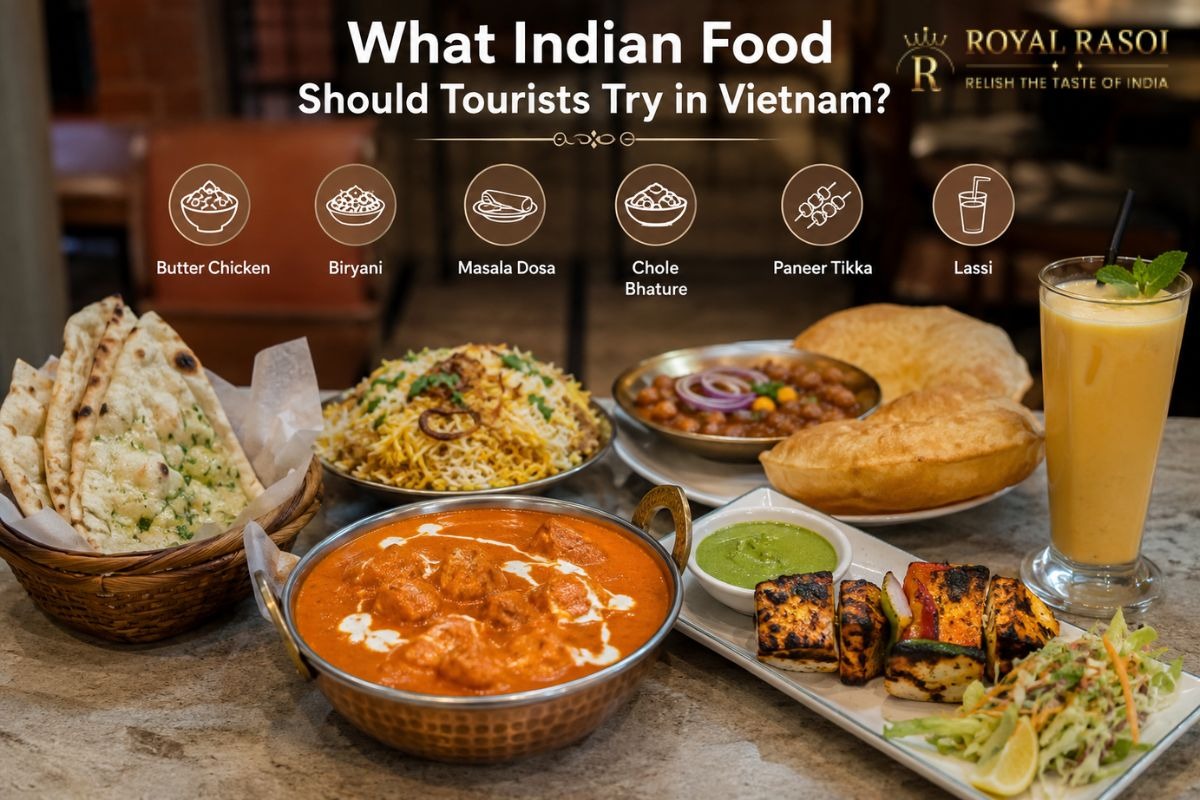
| Butter Chicken | Tandoori chicken in a tomato-cream sauce | Confirm the chicken sourcing, not just the sauce |
| Rogan Josh | Slow-cooked lamb curry, Kashmiri-style | Usually fine by default, given the meat used |
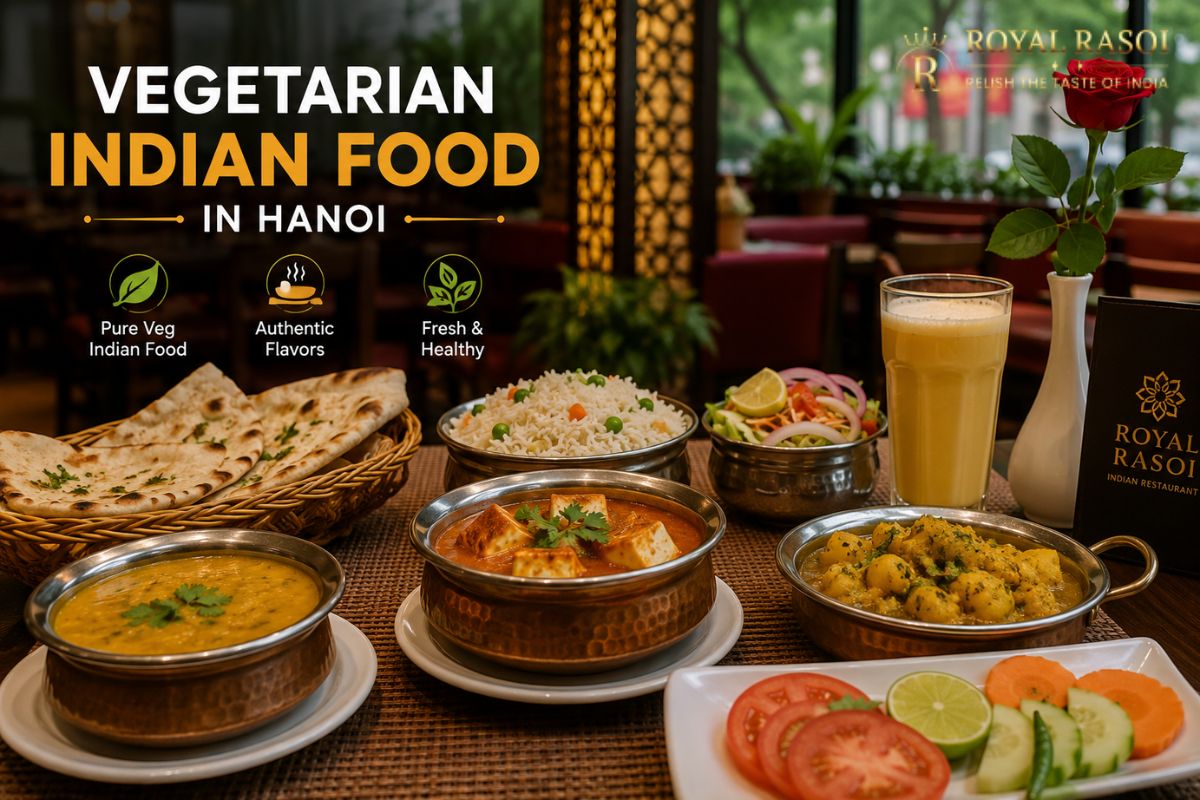
| Dal Makhani | Black lentils simmered with butter and cream | Vegetarian, no meat to worry about |
| Biryani | Layered rice with meat or vegetables | Ask which protein before you order |
| Paneer Tikka | Marinated, grilled cottage cheese | Vegetarian, safe by default |
Therefore, a large share of most North Indian menus is vegetarian anyway, which is handy if you'd rather skip the meat-sourcing conversation altogether.
Fine dining vs casual: which suits your visit?
Not every trip calls for the same kind of restaurant. A fine dining Indian restaurant in Hanoi makes sense for a business dinner, an anniversary, or any night where the experience matters as much as what's on the plate. Expect more formal service, a curated wine and mocktail list, and plating that's clearly meant to be photographed.
Casual spots suit a quick weekday lunch or a family outing where variety matters more than ceremony. The food isn't necessarily worse. It's just a different kind of meal, usually faster and less fussy about seating.
If halal sourcing is a hard requirement, don't assume fine dining automatically means stricter standards. Some upscale places actually have less flexibility with suppliers because their menus are more fixed. Ask either way directly, regardless of price point.
Comparison table: what to look for
| Factor | Casual Indian Restaurant | Fine Dining Indian Restaurant |
|---|---|---|
| Price range | Budget to mid-range | Higher, often set menus |
| Halal transparency | Varies, ask directly | Usually stated on request |
| Best for | Quick meals, families | Special occasions, business dinners |
| Menu breadth | Wide, often 40+ dishes | Curated, fewer but more refined |
| Reservation needed | Rarely | Often recommended |
Common mistakes when searching for halal food in Hanoi
A few things trip people up over and over:
- Assuming "no pork" means halal – A lot of restaurants skip pork simply because it's uncommon in South Asian cooking generally, not because the rest of the kitchen follows halal sourcing.
- Not asking about cooking oil and utensils – A shared fryer or grill used for non-halal items can be an issue even when the meat itself is halal.
- Trusting reviews over a direct check – Reviews are useful for food quality, but sourcing claims shift or get exaggerated. A quick message to the restaurant beats relying on a two-year-old review.
- Writing off a place because meat sourcing is unclear – A strong vegetarian menu is often a reasonable middle ground rather than skipping the restaurant outright.
Final thoughts
Finding halal-friendly Indian food in Hanoi mostly comes down to knowing which two or three areas to check first, then asking direct questions once you're there. Cau Giay has become one of the more dependable spots, and a solid vegetarian menu is always a fair fallback when sourcing details aren't clear. Among the best Indian restaurants in Hanoi for halal dining, Royal Rasoi has built a reputation on being upfront about where its meat comes from, which saves you the trouble of asking.
Frequently asked questions
- Is Indian food generally halal by default?
No. Some dishes use alcohol-based marinades or meat that isn't halal-sourced, so it really depends on the kitchen. - What's the difference between halal-certified and halal-friendly?
Certified means a third party has audited the sourcing and kitchen practices. Friendly means the restaurant follows similar principles without going through that process. - Are there halal-certified Indian restaurants in Hanoi?
Formal certification is still rare citywide. Some restaurants source halal meat consistently without the paperwork, so it's worth confirming directly rather than guessing. - Why is Cau Giay a good area to search in?
It has a growing South Asian and Middle Eastern resident population, and that's pushed local restaurants toward more consistent halal sourcing than tourist-heavy areas. - Can vegetarians avoid the halal question entirely?
Pretty much. North Indian menus lean heavily on dal, paneer, and vegetable curries, which sidestep meat sourcing altogether. - Is fine dining Indian food in Hanoi more expensive than casual options?
Usually, yes, though the gap isn't huge everywhere. You're paying more for ambiance and service than for the ingredients themselves. - Should I call ahead to confirm halal sourcing?
Worth doing, especially for a group or a special occasion. Menus online don't always match current sourcing. - Does biryani typically use halal meat in Hanoi restaurants?
Depends entirely on the restaurant and which protein they use. Ask before you order rather than assuming from the name.